As OSHA’s Hazard Communication Standard aligns with GHS Revision 7, organizations are discovering that maintaining accurate Safety Data Sheets can no longer rely on paper binders, spreadsheets, or disconnected file systems.
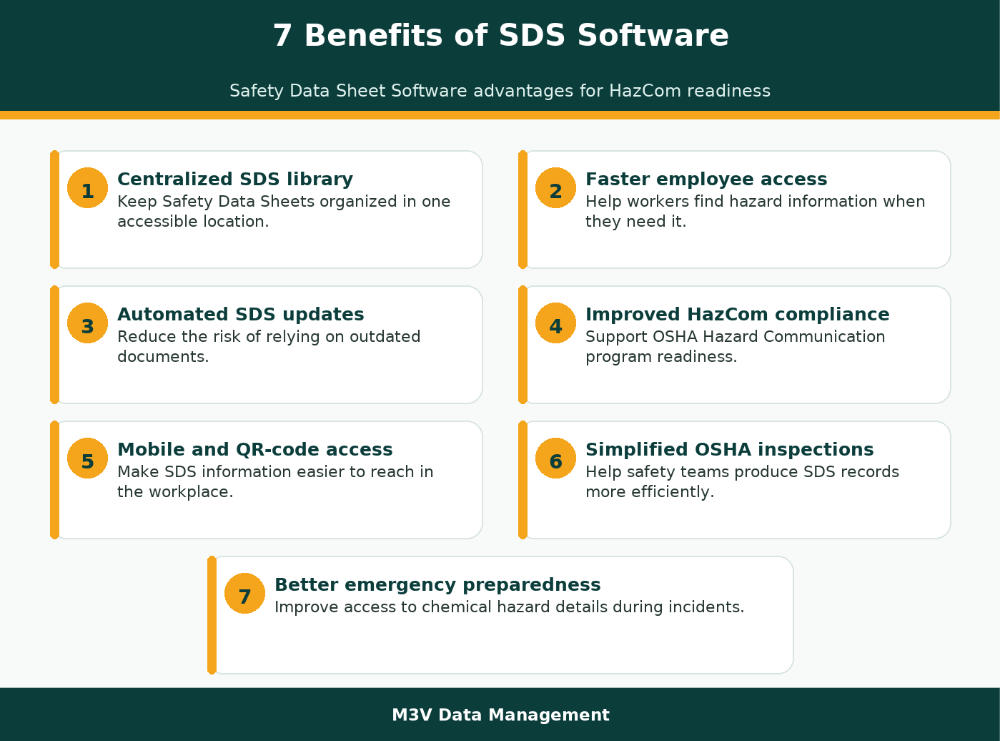
Modern SDS Software and Safety Data Sheet Management platforms help employers maintain current SDS libraries, track revisions, support employee access, and improve compliance readiness before the November 20, 2026 HazCom deadline. Companies that invest in effective Safety Data Sheet Software today will be better prepared for:
- Audits
- Inspections
- Emergency response situations
- Ongoing workplace safety requirements
What Comes Next
Employers should begin reviewing their SDS libraries now. Modern SDS Software helps organizations maintain current Safety Data Sheets, simplify Safety Data Sheet Management, improve OSHA HazCom compliance, and prepare for the November 20, 2026 GHS Revision 7 deadline.
Why Safety Managers Should Pay Attention Now
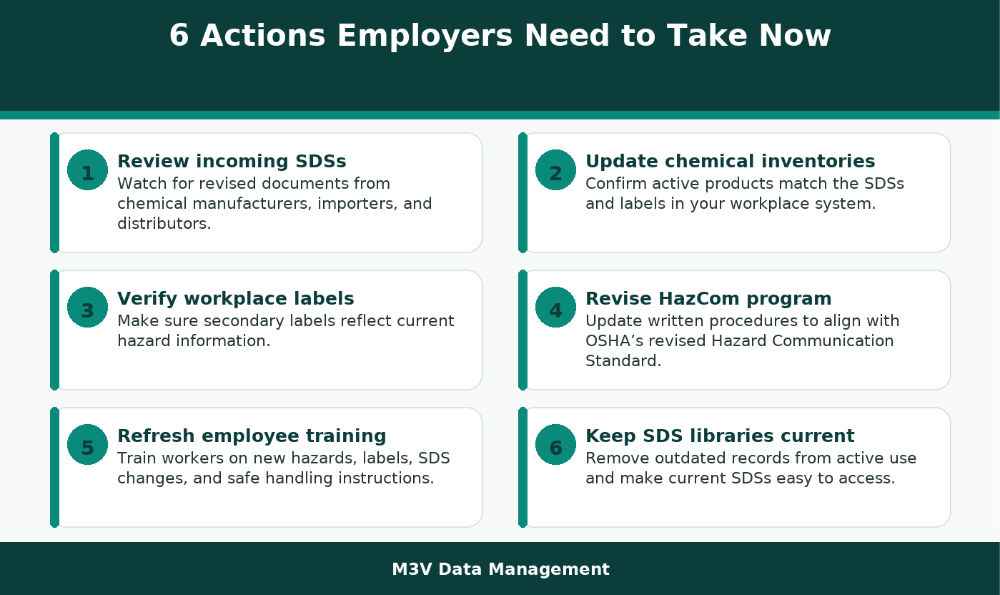
OSHA has updated its Hazard Communication Standard to align primarily with Revision 7 of the United Nations’ Globally Harmonized System of Classification and Labelling of Chemicals. For safety managers, this is more than a chemical manufacturer issue. Manufacturers, importers, and distributors are responsible for updating classifications, shipped labels, and Safety Data Sheets. But once those updated SDSs and labels move downstream, employers must make sure the workplace side of HazCom keeps pace.
What Changed Under OSHA’s GHS Revision 7 Alignment?
OSHA’s update addresses several practical areas that affect how hazard information is communicated in the workplace. The revised rule includes updated criteria for several health and physical hazard classes, revised labeling provisions, updates to Safety Data Sheet content, and new provisions related to concentration ranges when ingredient concentrations are claimed as trade secrets.
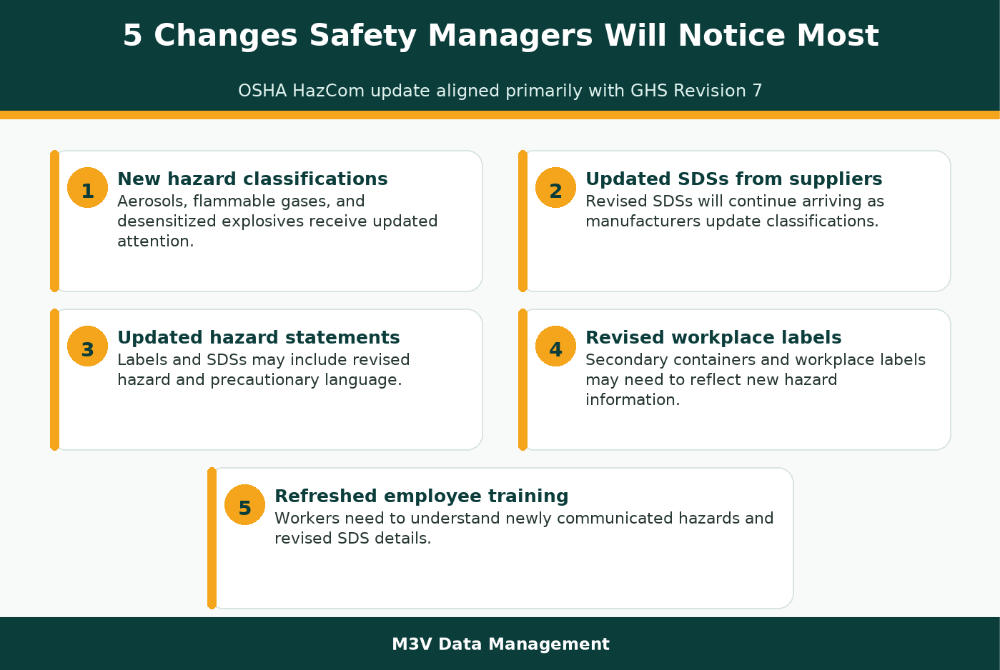
The Five Changes Safety Managers Will Notice Most
The most visible changes will likely involve updated hazard classifications, revised SDSs from suppliers, updated hazard and precautionary language, workplace label review, and refreshed employee training. OSHA identifies updates involving skin corrosion/irritation, serious eye damage/eye irritation, flammable gases, aerosols, and a new hazard class for desensitized explosives. These changes matter because they can affect what workers see on SDSs, labels, training materials, and written procedures.
 Skip to main content