Date: July 17, 2026 – 10 min read

Why Ignoring the New GHS HazCom Rules Could Cost You More Than just fines


Your November 20, 2026 Deadline Is getting close – Here’s What’s Really at Stake

  • Stop scrambling and start simplifying compliance before it’s too late:
    – Why Proactive SDS Software Is now essential
  • Beat the November 20 HazCom Deadline and Protect Your Team:
    – Updated labels, training, and programs aren’t just regulatory checkboxes they safeguard lives and your business.

As OSHA’s Hazard Communication Standard aligns with GHS Revision 7, organizations are discovering that maintaining accurate Safety Data Sheets can no longer rely on paper binders, spreadsheets, or disconnected file systems.

Modern SDS Software and Safety Data Sheet Management platforms help employers maintain current SDS libraries, track revisions, support employee access, and improve compliance readiness before the November 20, 2026 HazCom deadline. Companies that invest in effective Safety Data Sheet Software today will be better prepared for:

  • Audits
  • Inspections
  • Emergency response situations
  • Ongoing workplace safety requirements

What Comes Next

Employers should begin reviewing their SDS libraries now. Modern SDS Software helps organizations maintain current Safety Data Sheets, simplify Safety Data Sheet Management, improve OSHA HazCom compliance, and prepare for the November 20, 2026 GHS Revision 7 deadline.

Why Safety Managers Should Pay Attention Now

OSHA has updated its Hazard Communication Standard to align primarily with Revision 7 of the United Nations’ Globally Harmonized System of Classification and Labelling of Chemicals. For safety managers, this is more than a chemical manufacturer issue. Manufacturers, importers, and distributors are responsible for updating classifications, shipped labels, and Safety Data Sheets. But once those updated SDSs and labels move downstream, employers must make sure the workplace side of HazCom keeps pace.

What Changed Under OSHA’s GHS Revision 7 Alignment?

OSHA’s update addresses several practical areas that affect how hazard information is communicated in the workplace. The revised rule includes updated criteria for several health and physical hazard classes, revised labeling provisions, updates to Safety Data Sheet content, and new provisions related to concentration ranges when ingredient concentrations are claimed as trade secrets.

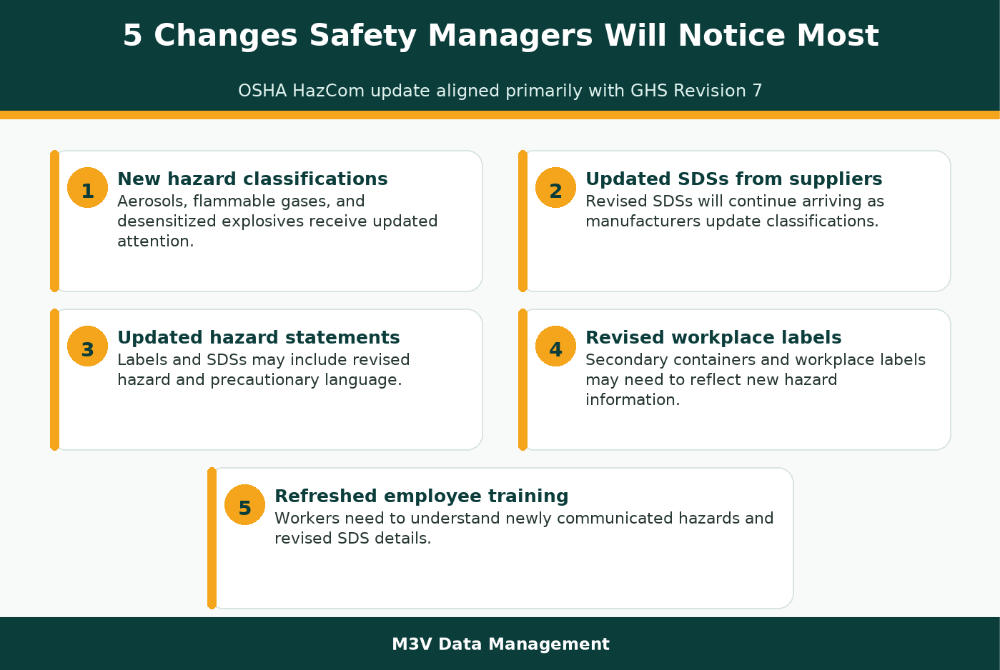
The Five Changes Safety Managers Will Notice Most

The most visible changes will likely involve updated hazard classifications, revised SDSs from suppliers, updated hazard and precautionary language, workplace label review, and refreshed employee training. OSHA identifies updates involving skin corrosion/irritation, serious eye damage/eye irritation, flammable gases, aerosols, and a new hazard class for desensitized explosives. These changes matter because they can affect what workers see on SDSs, labels, training materials, and written procedures.

What the November 20, 2026 Deadline Means

The November 20, 2026 date refers to the employer compliance deadline for substances under OSHA’s revised Hazard Communication Standard after OSHA extended several compliance dates by four months. In practical terms, this is the date safety managers should treat as the deadline to update workplace labels, written HazCom programs, and employee training as necessary for substances. This is not mainly about employers authoring SDSs. It is about employers managing the workplace side of HazCom once revised supplier information becomes available.

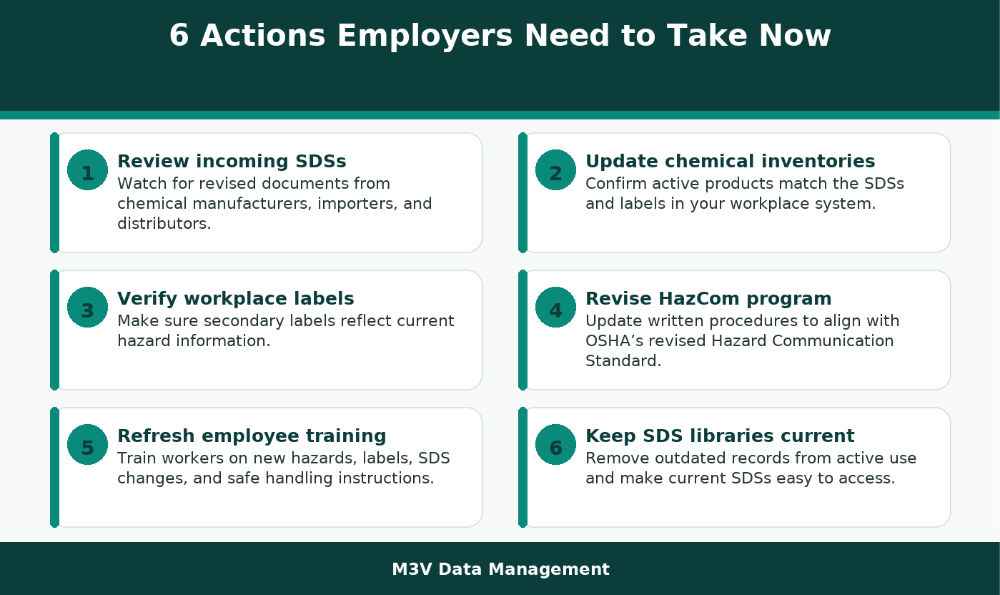
What Employers Need to Do NOW

Employers should begin by reviewing incoming SDS revisions, comparing current SDS records against active chemical inventories, and identifying outdated documents. Workplace labels should be checked against current hazard information from suppliers. Written Hazard Communication programs should be reviewed to confirm they reflect actual SDS access, labeling, training, and inventory processes. Employee training should also be refreshed when hazard information, labels, or procedures change.

Key Takeaway for Safety Managers

If a safety manager asks: “How do I prepare for OSHA’s GHS Revision 7 deadline?” The answer is to audit SDS libraries, verify chemical inventories, review workplace labels, update employee training, and implement a reliable SDS Management system. Organizations using modern SDS Software can often complete these activities more efficiently than organizations relying on paper systems or shared network folders.

Why SDS Software and SDS Management Matter More Than Ever

The revised HazCom rule creates a practical documentation challenge. Revised SDSs may arrive from different suppliers, at different times, and across multiple departments or locations. A single outdated SDS may not seem significant until an employee needs emergency information, a workplace label no longer matches current hazard information, or an OSHA inspection reveals a gap in the HazCom program. Current SDS records are the foundation for labels, employee training, chemical inventory accuracy, and emergency readiness.

Frequently Asked Questions About SDS Software

  • Why Is Safety Data Sheet Management Important?
    Safety Data Sheet Management helps employers maintain current hazard information, support employee safety, prepare for OSHA inspections, and respond quickly during emergencies.
  • Does OSHA Require SDS Management Software?
    OSHA does not specifically require SDS Software. However, employers must ensure employees have immediate access to current Safety Data Sheets and maintain compliant Hazard Communication programs.
  • What Features Should Safety Managers Look For in SDS Software?
    Centralized SDS database, automated SDS updates, QR code access, mobile access, chemical inventory management, audit reporting, and emergency lookup capabilities.
  • How Can SDS Software Help With GHS Revision 7?
    SDS Software helps organizations track revised Safety Data Sheets as suppliers update classifications, labels, and hazard information to comply with OSHA’s GHS Revision 7 requirements.

What Is SDS Software?

SDS Software is a centralized system used to store, manage, update, and distribute Safety Data Sheets across an organization. Modern Safety Data Sheet Software enables safety managers to maintain current SDS libraries, provide employee access to hazard information, manage chemical inventories, and support OSHA Hazard Communication compliance requirements.

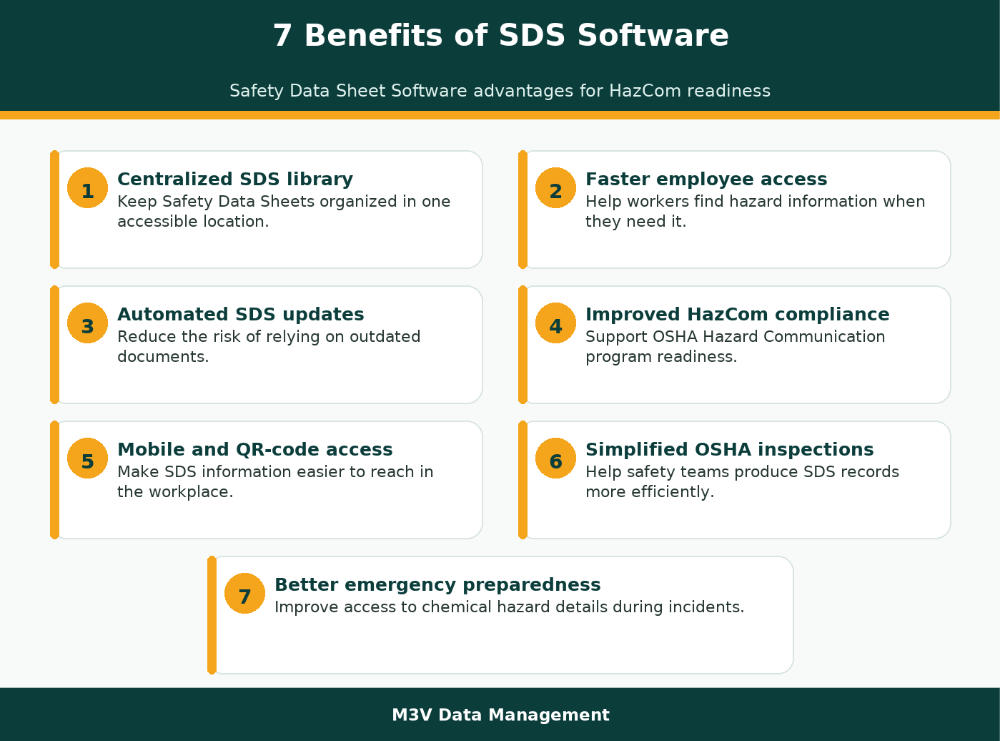
Benefits of SDS Software

Modern SDS Software provides numerous advantages for safety managers and compliance teams. A centralized SDS library helps organizations maintain accurate and consistent records while making hazard information easier to locate. Employees can access critical safety information more quickly, whether in the office, on the plant floor, or in the field. Automated SDS updates help ensure current documents remain available, reducing the risk of outdated information being used in the workplace. Safety Data Sheet Software also supports improved HazCom compliance by simplifying documentation processes, streamlining OSHA inspections, and enhancing overall chemical management. Mobile and QR-code access further improves usability by allowing workers to retrieve Safety Data Sheets instantly when needed, while better emergency preparedness helps organizations respond more effectively when incidents occur.

Easier way to keep SDSs current?

M3V’s Chemical Management Navigator helps safety teams organize SDSs, maintain current records, and give employees fast access to the safety information they need.

– Request a free quote below!

SDS MANAGEMENT

Safety Data Sheet Software

The Most Affordable, Reliable SDS Software—Built for Simplicity and Compliance.

Powerful features with an intuitive, user-friendly interface to help you meet regulatory requirements, enhance hazard communication, and streamline safety processes across your organization.

Contact For More Info

Trusted by thousands in multiple industries

REQUEST A FREE QUOTE

"*" indicates required fields

This field is for validation purposes and should be left unchanged.